
As I write, the betting app Polymarket, which lets you wager on real-world events ranging from sports scores to snowfall, has the chance of more Epstein Files this month at 9%. The chance of Trump appearing in them is 75%. The US government blew past the December 19 legal deadline for the documents’ full disclosure. Meanwhile, they invaded Venezuela and Minnesota. Reasonable people may wonder what they’re hiding. One day, the last tranche is gonna drop, but calls to “Release the Files” smooth over the bigger question: Will more Epstein Files tell us anything about the era’s most notorious sexual predator and his world-owning pals that we don’t already know? The smart money would be on “no.” Like previous batches, any new documents will be remarkable less for what they show than what they don’t. They’ll be redacted to oblivion.
It takes a pre-sloptimist faith to hope for a revelation among these files. Given the swirl of AI-generated shit around every major news story, and the Trumpist taste for polluting the discourse with slop. Even when there’s unquestionable truth in photography, as with the ICE killings in Minneapolis, MN, they’ll tell you not to believe your eyes. Sure, inept censors occasionally leave searchable text under the black bars. We might also get glimpses of Epstein’s bizarre rich-bro taste in home decor. But what righteous insights could possibly come out of this Department of Justice?
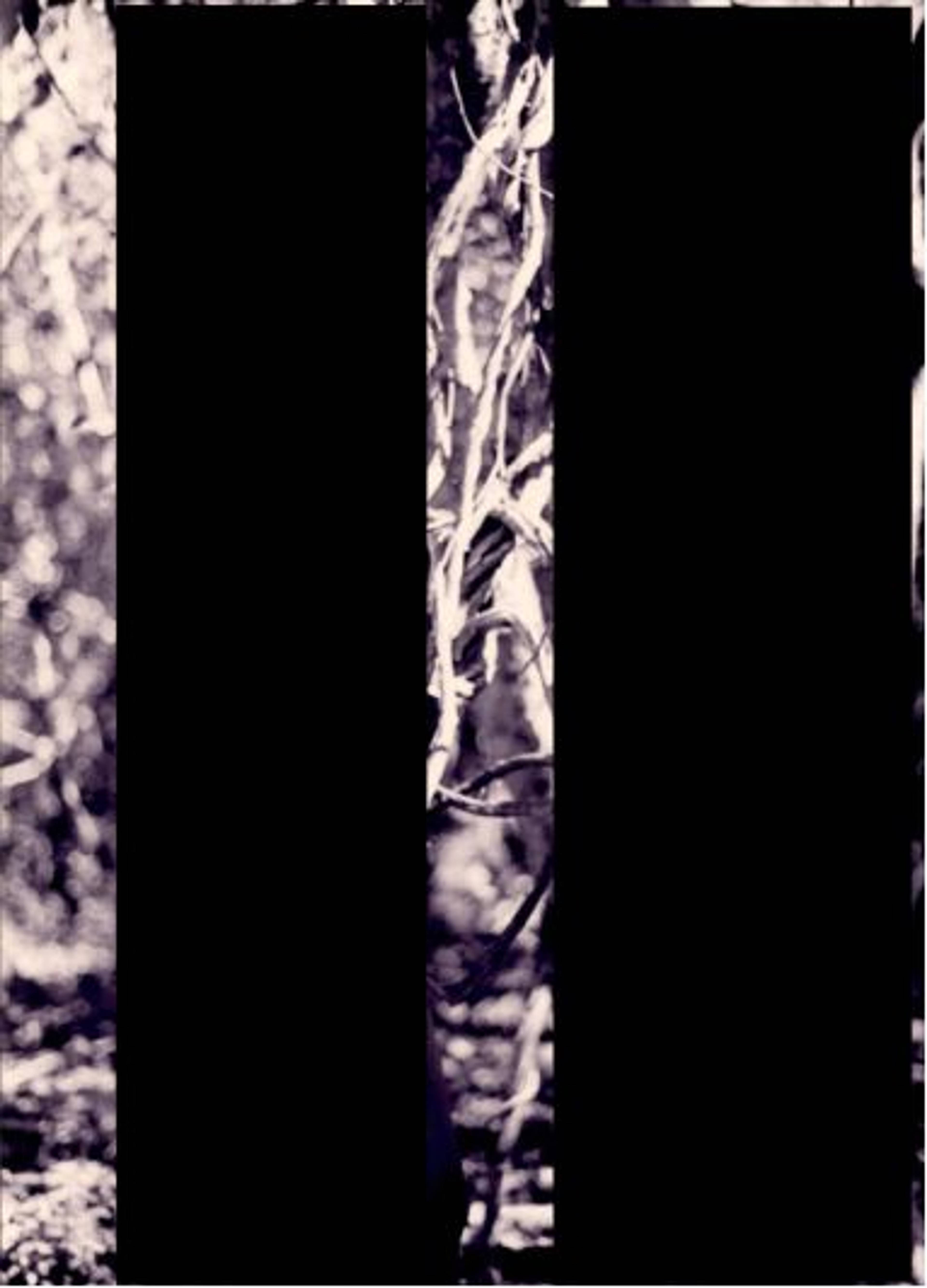
Redacted photograph, Epstein Files (Data Set 3, EFTA00004012). Courtesy: US Department of Justice
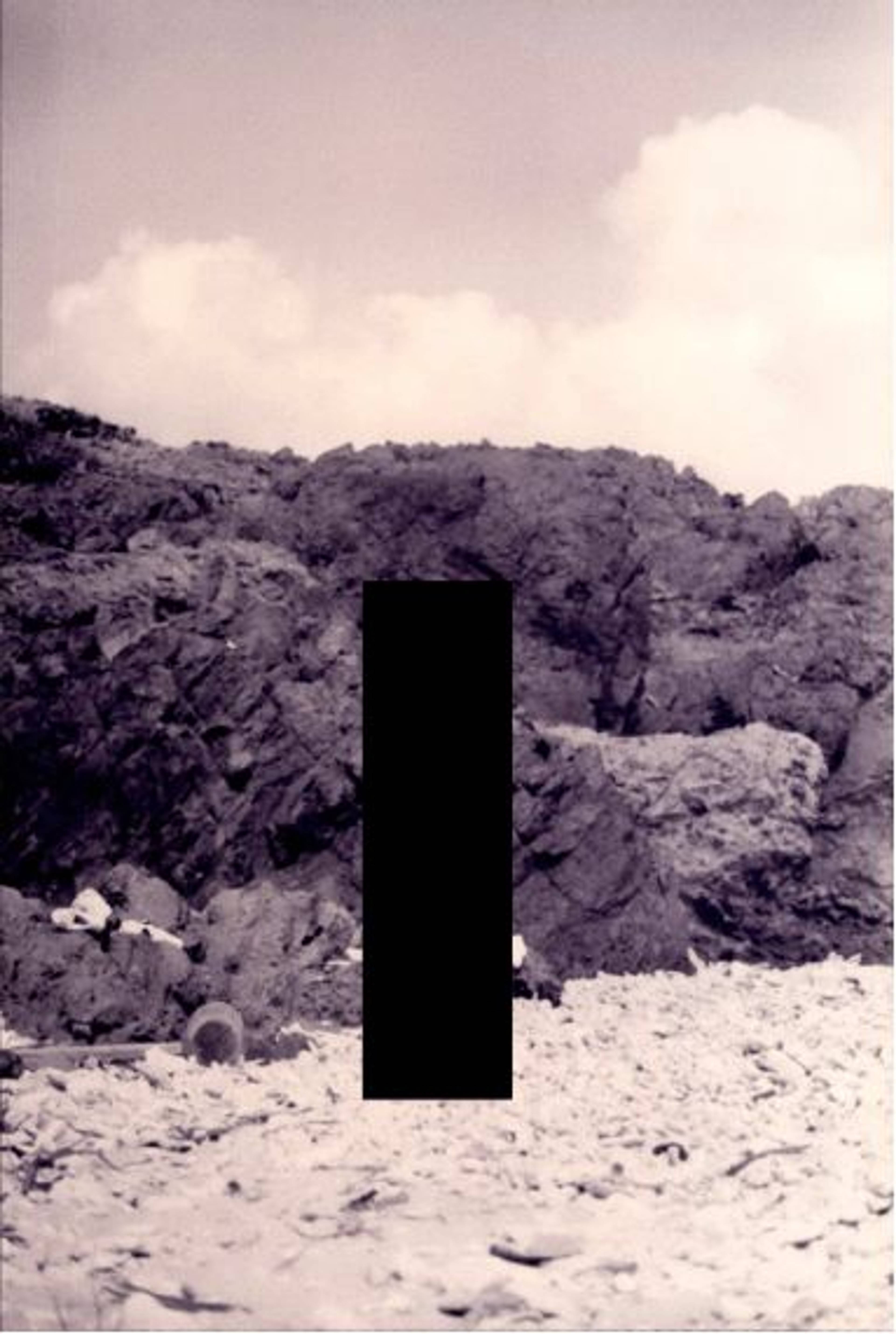
Redacted photograph, Epstein Files (Data Set 3, EFTA00004012). Courtesy: US Department of Justice
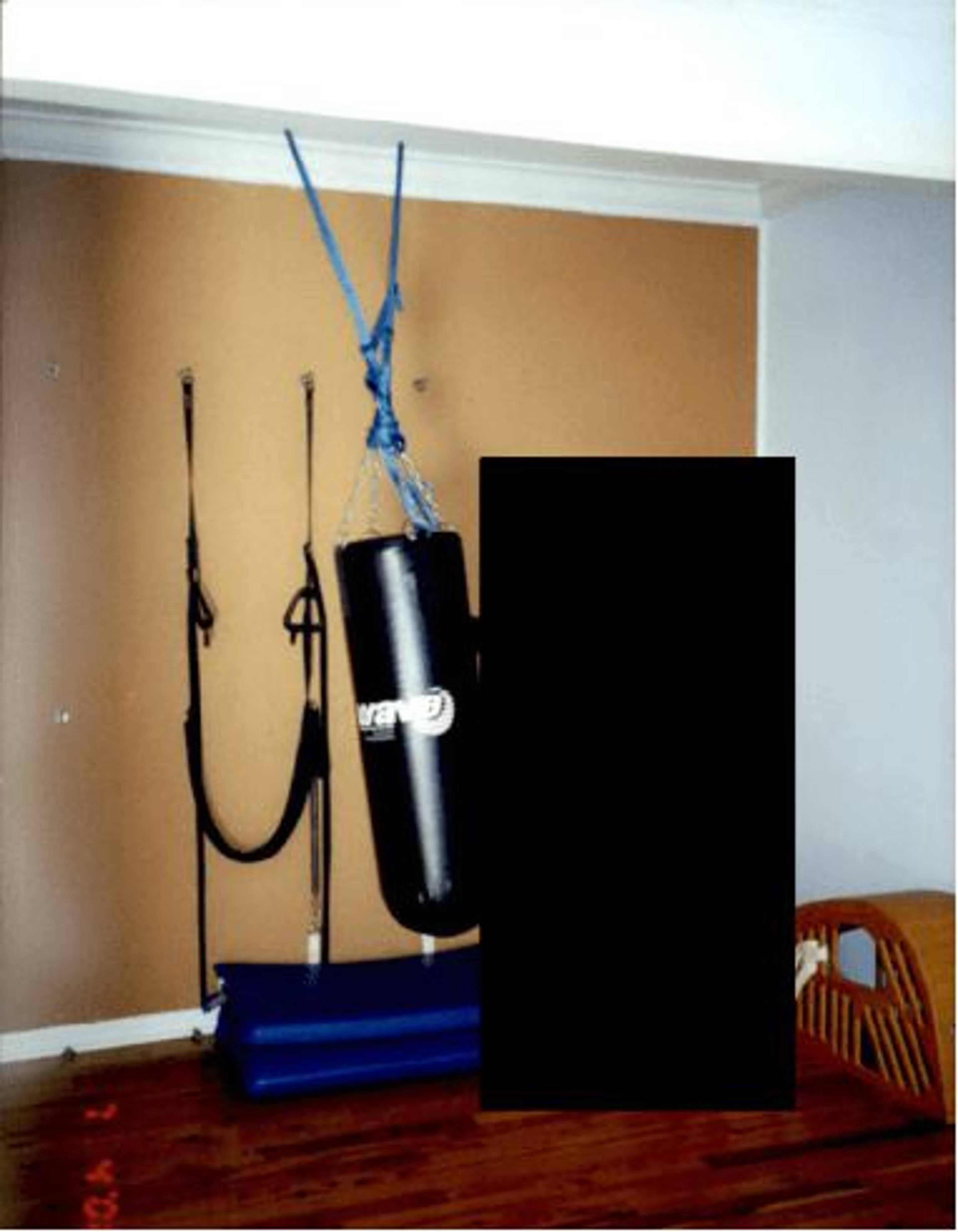
Redacted photograph, Epstein Files (Data Set 3, EFTA00004012). Courtesy: US Department of Justice
The desire must be something else. The files are about the redactions. In a sensitive legal case like this, they protect the victims, many of whom were minors. They should have their privacy, decency says leave these spaces be. But redactions also sustain a kind of speculation, conspiracy, suspicion. They seem to prove through omission that something important and revelatory is being hidden.It’s an article of faith that the black rectangles are concealing something, or someone. In the many candid photographs in the Epstein cache, the assumption is that these voids conceal an indexical image, and that that image tells the truth.
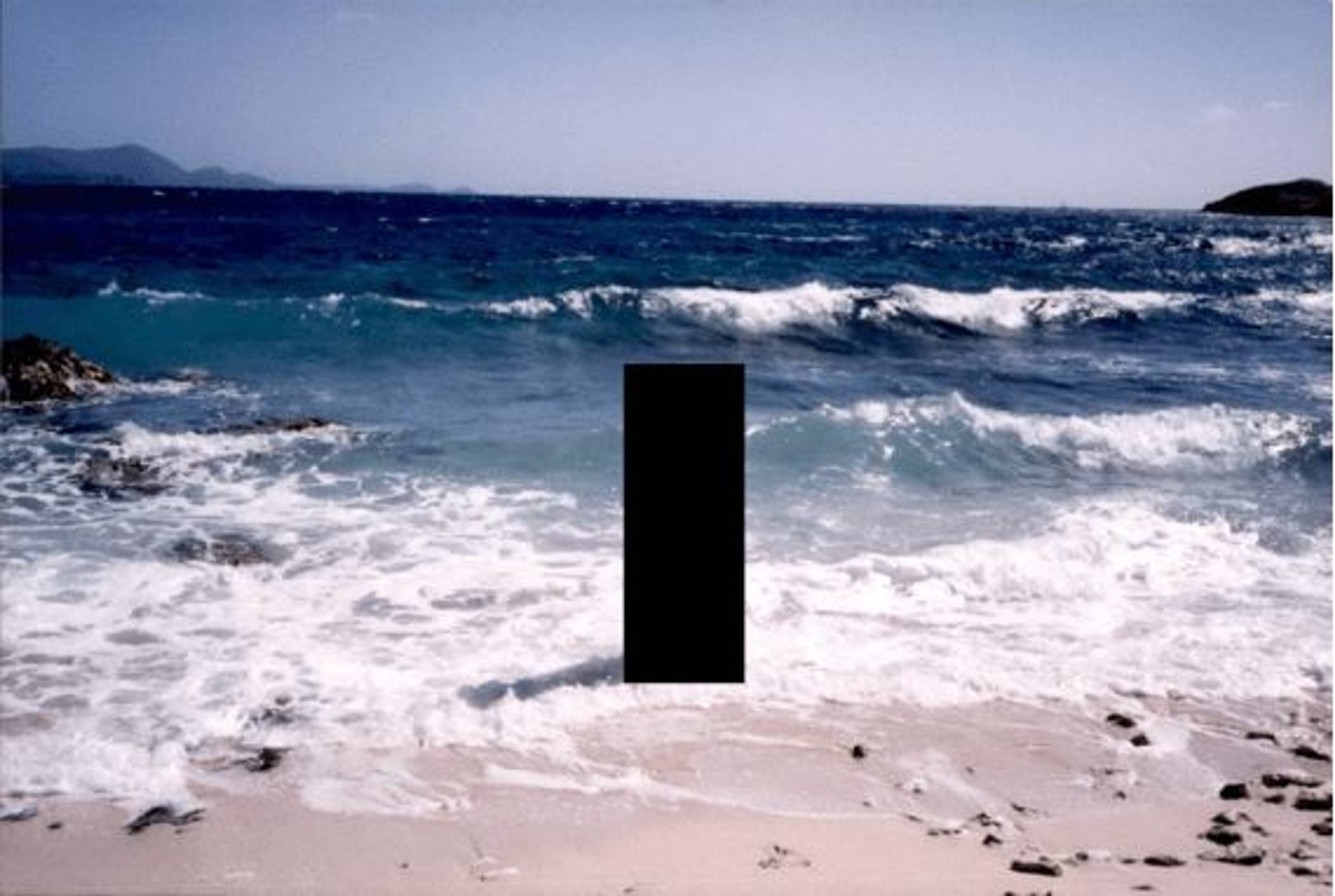
More than evidence, the photographs in the Epstein Files furnish a kind of art. The redaction becomes a thing in itself, a solid, a 4D space of pure potential. Not to belabor the eerie creep of Epstein with his arms around two black rectangles in a blown-out snapshot, or the softcore slivers of black and white nudes at the edges of black squares. One striking picture says it all: a tall black vertical centered in a horizontal photo of an azure beach. A shadow cuts into the surf, as if thrown by the redaction itself.
The conspiratorial mind doesn’t want to uncover the truth behind the redaction, not really. The game is to keep the possibilities in play, to keep worshipfully circling this black hole in the middle of the culture.
In Western art, the black rectangular void stands for the unknown or unfathomable. The immediate comparison is to the famous monolith from Kubrick’s 2001: A Space Odyssey (1968). In the film, an alien onyx prism, seemingly dense with transformative knowledge, appears at pivotal moments in human evolution to catalyze the species’ next leap. It’s a metaphor, of course, for tools like LSD. Formally, the US-American Minimalist John McCracken got there a year earlier, with Black Plank (1967), a polished resin-coated beam leaned against the white wall. It’s a reified abstraction, an elegant chunk of finality and lack. It gives you nothing, but it might catalyze something that’s inside you already.
The Belgian poet and artist Marcel Broodthaers said it best, though, in 1969 – the late 60s were boomtime for psychedelic voids – with his artist book Un coup de dés jamais n’abolira le hasard (A Throw of the Dice Will Never Abolish Chance). The piece is simple. Broodthaers took the first edition of French poète maudit Stéphane Mallarmé’s 1914 poem of the same name and replaced the typesetting with black bars. I say replaced – there’s no text under there, nothing being covered up. The redactions are the poem.
Why pry into the redaction, when there’s nothing to find. Sometimes there is, though. You could say the first jolt of modernist abstraction was Kasimir Malevich’s Black Square – that’s it, just a black square with a white border. On its 100th anniversary, historians subjected the 1915 version to X-ray photography – they tried to pry apart the void. And they did find a few items of interest. A colorful proto-constructivist composition, already showing through the cracks in the black. And, evidently in the artist’s handwriting, a racist joke about black people fighting in a lightless cellar. Versions of this joke abound. A blank page? No, two polar bears fornicating in a snowstorm ... Because this recalcitrant “purity” of minimalism is provocative. People want to put a scenario there, a conflict, imagine a conclusion.
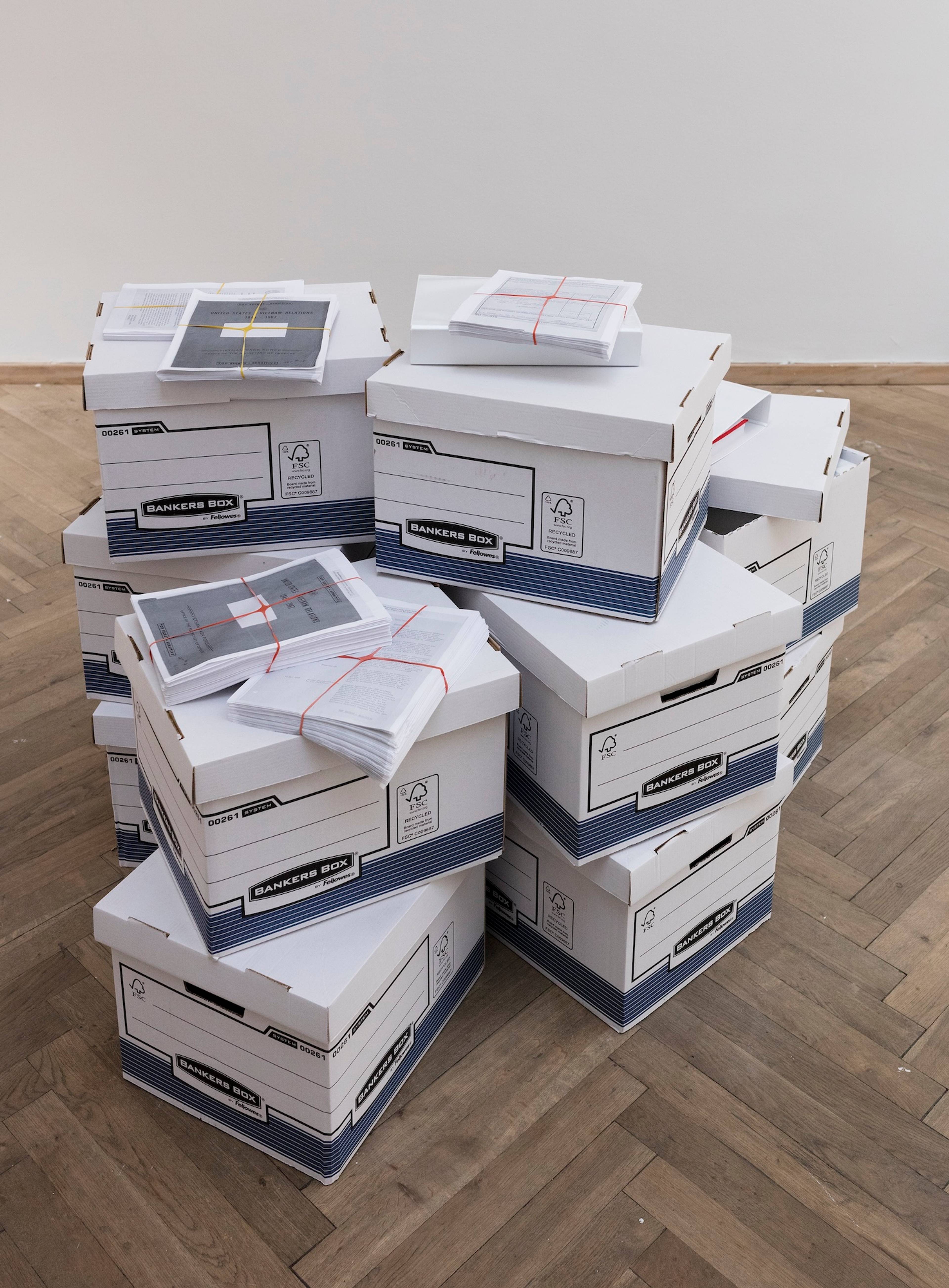
Daniel Elsberg, Pentagon Papers, 1971, boxes of papers. Installation view, “Whistleblowers & Vigilantes,” Kunsthal Charlottenborg, 2017. Photo: Anders Sune Berg
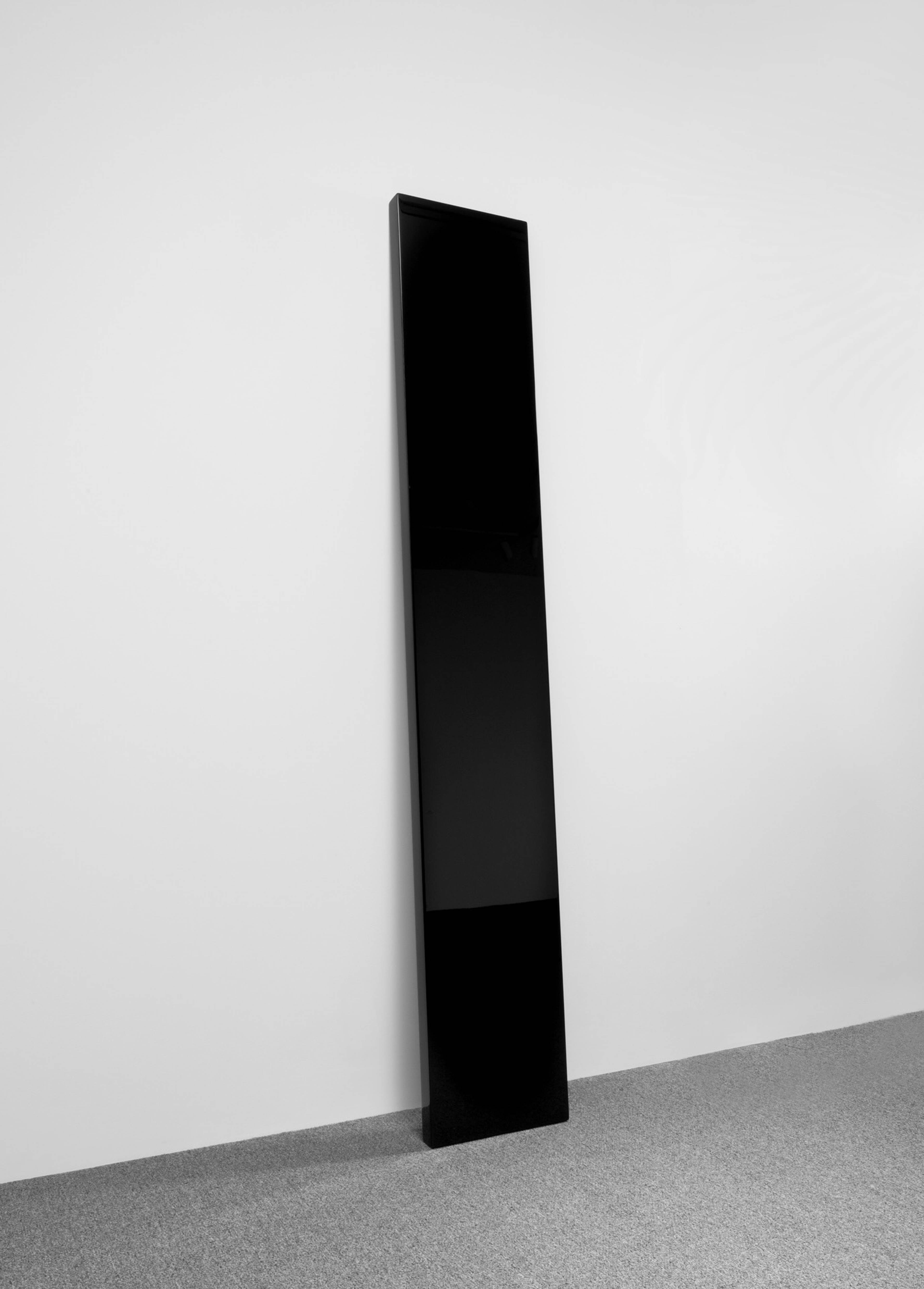
John McCracken, Black Plank, 1967, polyester resin, fiberglass, and plywood, 244 x 40.5 x 6.3 cm. Courtesy: National Gallery of Art, Washington
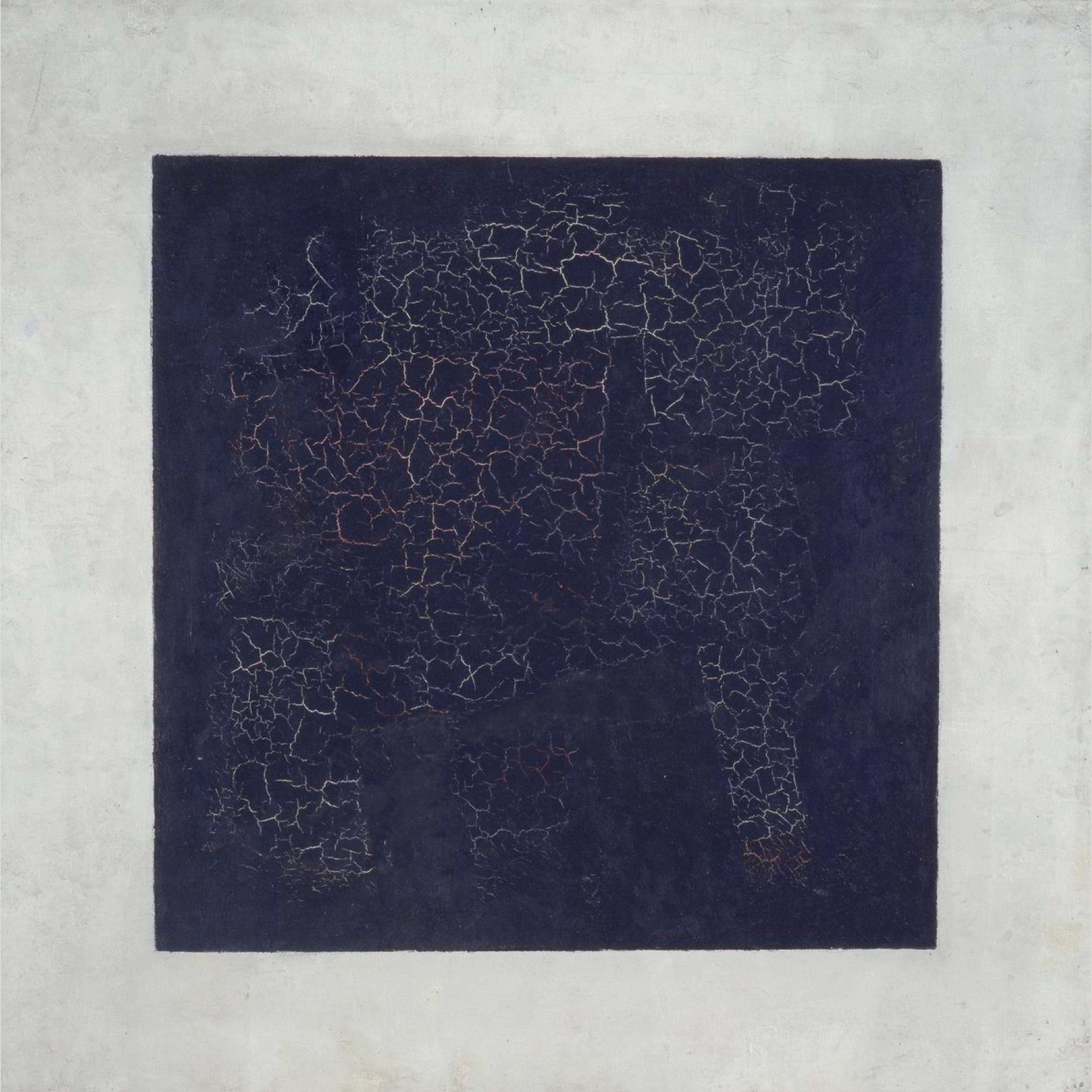
Kazimir Malevich, Black Square (Black Suprematic Square), 1915, oil on linen, 79.5 × 79.5 cm
The late 1960s also engendered the Pentagon Papers, one of the most famous leaks in US history, up there with the Snowden Disclosures. The feds compiled a top-secret report on the Vietnam War in 1968, and in 1971 one of its authors leaked portions to the New York Times. There were bombshells, the administration had lied to the public and to Congress, they’d escalated the war in secret. They were caught red-handed. Did it change how the government operates? I wish I could say it did. In 2017, a show at the Kunsthal Charlottenborg in Copenhagen called “Whistleblowers & Vigilantes” included a printout of the Papers, attributed to the leaker Daniel Ellsberg (1971) as if it were a work of art. These seven thousand pages just sat there on the hardwood floor, in stacks and in bankers’ boxes (one assumes), like some fractured monument to the power of truth.
In the US, these dramas of secrecy and revelation are a national pastime. People forget, but Trump declassified the JFK Assassination Files in 2025. The interminable wait for the Epstein Files speaks to Americans’ psychosexual, parasocial taste for true crime, especially, it has to be said, when the victims are young women. That redaction is a dark void. Better not to light it up. As a matter of fact, the conspiratorial mind doesn’t want to uncover the truth behind the redaction, not really. The game is to keep the possibilities in play, to keep worshipfully circling this black hole in the middle of the culture, but don’t fall in, because then you’d find the real horror: As art rock shaman Captain Beefheart put it, the truth has no pattern.
Yet, the probability markets offer a grim model of reality. They trace the trends of desire – for cosmic justice, for instance, or for money. They make patterns. Which is why, like a black rectangle standing on a beach, probabilities feel like an abstraction of an underlying truth, waiting to blast through the blank. That’s the trick of AI slopaganda, which at bottom is abstracted from statistics, a probable image drawn from a million mangled inputs. These fractionally true truths are thrown out there, over and over, on the assumption that one will land. That’s also the dark art of redaction: to keep those dice tumbling through the void, forever. But when the stakes are dear enough, you’ll feel the space between what you want to happen, and what you think will.
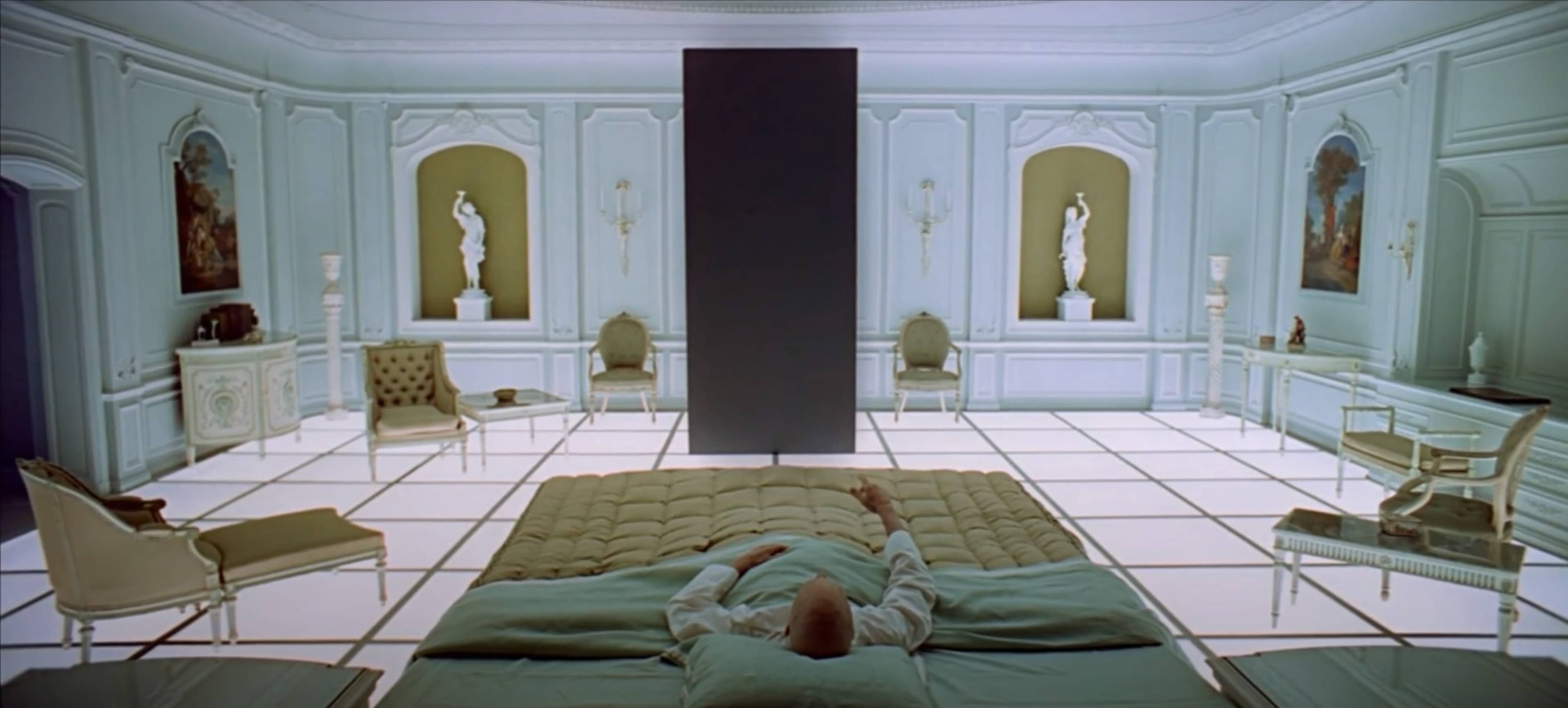
Still from Stanley Kubrick, 2001: A Space Odyssey, 1968